
Stinging Insects
Hornet
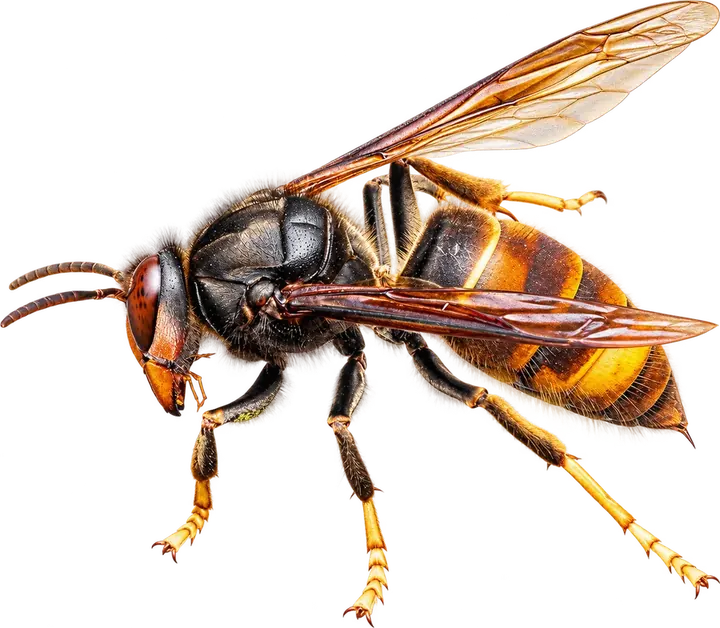
Large wasps that build grey, football-shaped paper nests in trees, shrubs and under eaves. In Northern Ontario, the bald-faced hornet is the most common.
Quick facts
- Size
- 1.5–3.5 cm, depending on species
- Colour
- Black and white, or brown and yellow
- Active season
- Late spring to first frost; most aggressive in late summer
- Where found
- Trees, shrubs, eaves, sheds
How to Identify
- Larger and thicker-bodied than most wasps
- Bald-faced hornets are black with white markings on the face and body
- Build large, enclosed grey paper nests
Signs to Look For
- A grey paper nest in a tree, shrub or under eaves
- Steady traffic of large wasps to one opening
- Insects buzzing around you defensively near the nest
Why It Matters
- Can sting repeatedly
- Defend nests aggressively when disturbed
- A serious risk for anyone allergic to stings
Prevention Tips
- Check eaves, sheds and shrubs for small nests in late spring
- Keep garbage and recycling sealed
- Never knock down or spray a large nest yourself
More Stinging Insects
Related Pests
Moderate risk
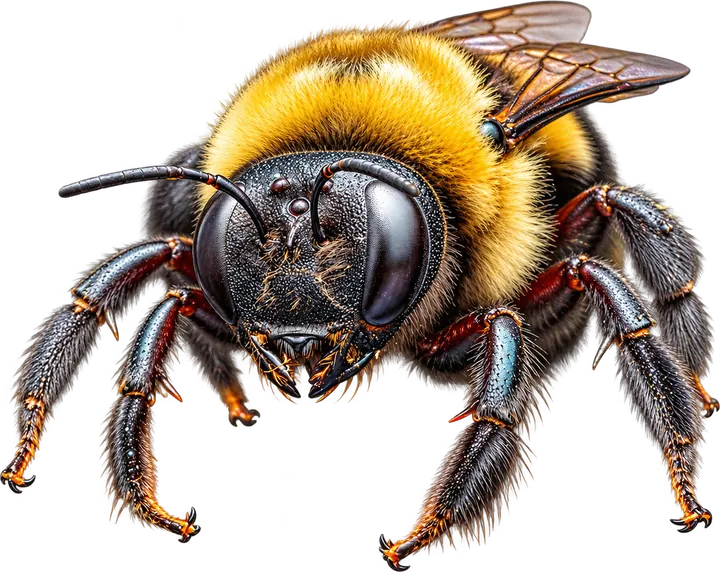
Carpenter Bee
A large bee that looks like a bumble bee but has a shiny black abdomen.
View pest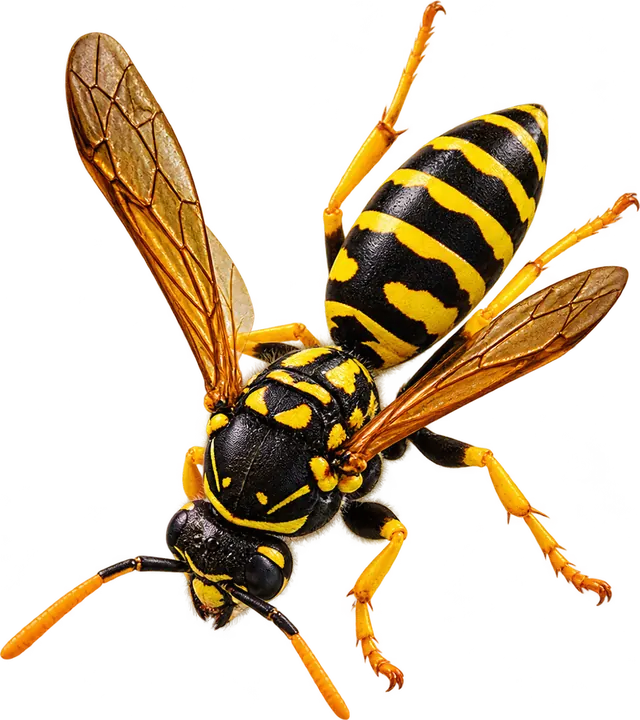
Moderate risk
Wasp
Slender paper wasps with long dangling legs that build open, umbrella-shaped nests under eaves, decks and railings.
View pest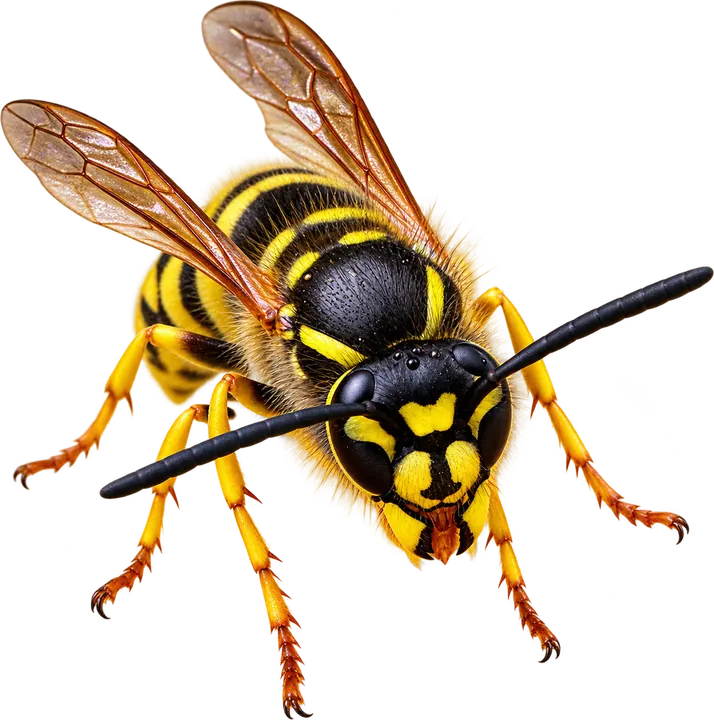
High risk
Yellow Jacket
Black-and-yellow wasps that nest in the ground, wall voids and attics.
View pest