
Stinging Insects
Carpenter Bee
A large bee that looks like a bumble bee but has a shiny black abdomen. It drills perfectly round holes into bare wood to nest.
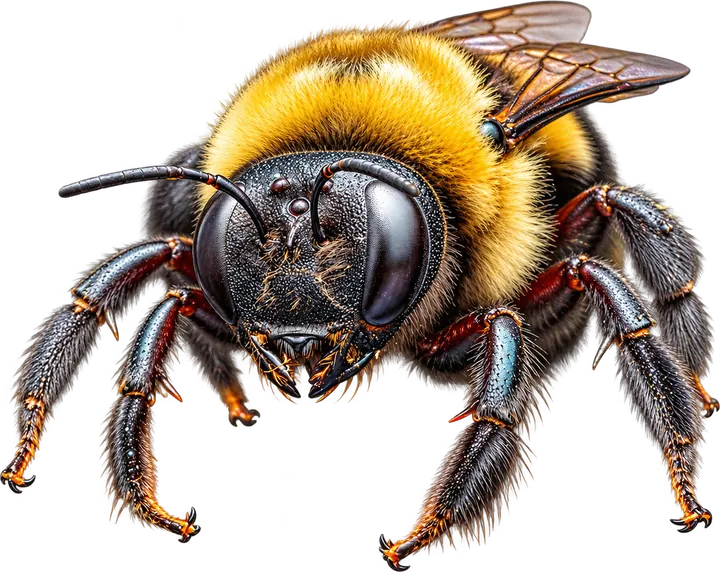
Quick facts
- Size
- 2–2.5 cm
- Colour
- Black and yellow; shiny black abdomen
- Active season
- Spring and early summer
- Where found
- Decks, eaves, fascia boards, fences, unpainted wood
How to Identify
- Similar in size to a bumble bee
- Smooth, shiny black abdomen — bumble bees are fuzzy and striped
- Hovers around wooden structures
Signs to Look For
- Perfectly round holes about 1 cm wide in wood
- Coarse sawdust below the holes
- Yellowish staining below entry holes
Why It Matters
- Tunnels weaken wood as they are reused year after year
- Woodpeckers may damage wood further looking for larvae
- Males are territorial but cannot sting; females rarely sting
Prevention Tips
- Paint or stain exposed wood
- Fill old holes in the fall
- Use painted or treated wood for decks and fences
More Stinging Insects
Related Pests
High risk
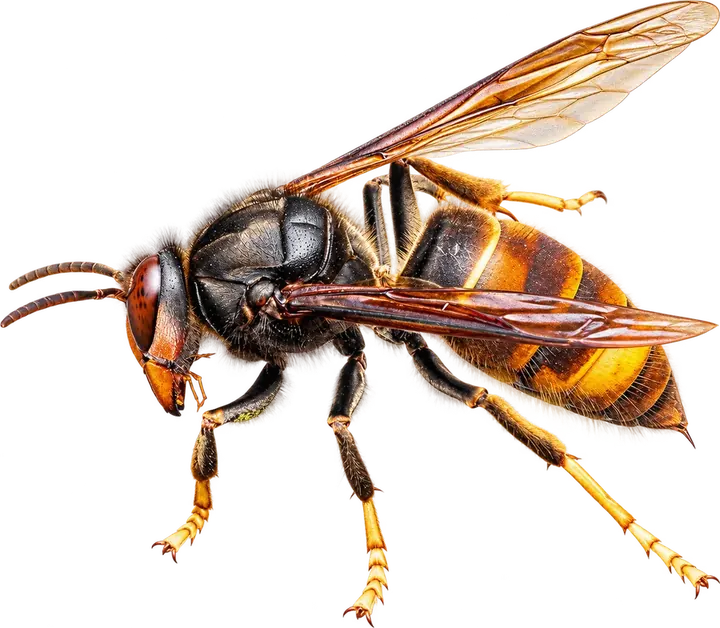
Hornet
Large wasps that build grey, football-shaped paper nests in trees, shrubs and under eaves.
View pest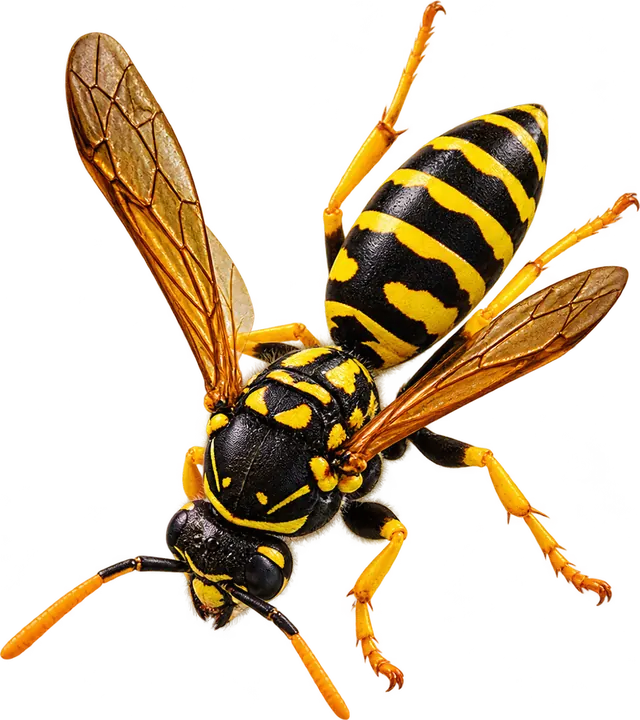
Moderate risk
Wasp
Slender paper wasps with long dangling legs that build open, umbrella-shaped nests under eaves, decks and railings.
View pest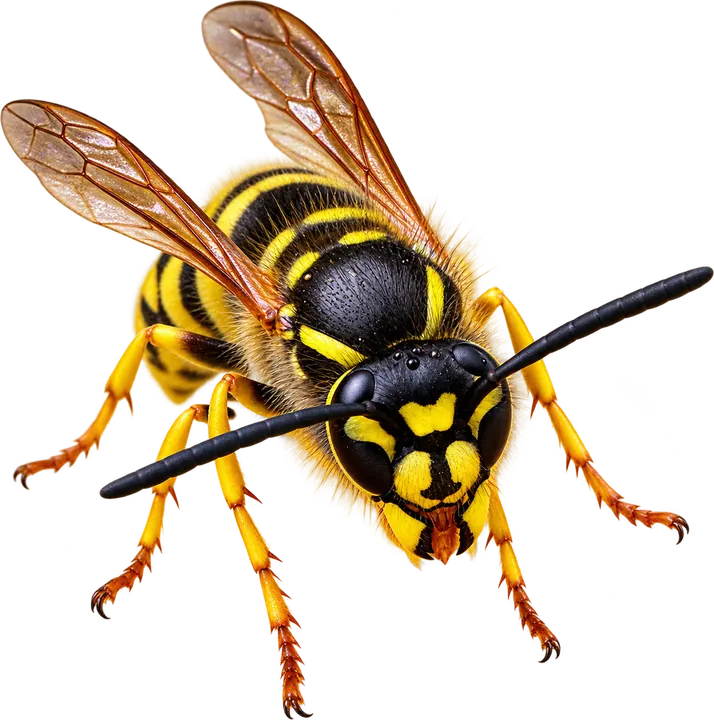
High risk
Yellow Jacket
Black-and-yellow wasps that nest in the ground, wall voids and attics.
View pest